

Cohen Kinne Valicenti & Cook was voted best law firm in the Berkshire Eagle’s “Best of the Berkshires 2019.” The firm has received the award, which is based on public voting, for the past three consecutive years.
We decided to organize a new firm because of our continuing commitment to all of our clients. The ideals on which the firm was founded include: (1) working within our individual areas of specialty at the highest level available anywhere, (2) establishing great working relationships with members of the Berkshire Bar and lawyers outside the Berkshires, and (3) embracing our passion and spirit for this work.
On January 1, 2009, we started the firm with six lawyers and six staff members. Many have remained and the Firm has doubled in size so that, on our Tenth Anniversary, we have 12 lawyers, and an amazing group of other experienced and capable professionals – all of whom subscribe to the firm’s Service Commitment (and work hard every day for our firm to be the best that it can be):
We know that our clients’ most exciting opportunities and most troubling challenges do not arise just on Monday through Friday between the hours of 8 AM to 5:30 PM; and whenever those opportunities or challenges arise, we are determined to immediately respond to our clients’ needs on a 24-7 basis.
We are pleased that we have upheld our Service Commitment throughout the first ten years of our existence. We are also very pleased that over the ten years we have made three new partners, Christopher M. Hennessey, Dennis G. Egan Jr. and Jesse Cook-Dubin, each of whom has been recognized as among the very best lawyers in Western Massachusetts in his practice specialty. And we are very proud of our very strong and growing relationships with other Berkshire County lawyers who have regularly turned to us to collaborate on the most difficult matters for their clients.
To our clients, colleagues, fellow Berkshire County lawyers, friends and family: we express our deep appreciation for the good fortune of our success to which all of you have contributed.
A Massachusetts federal court judge recently dismissed a claim by an individual against his former employer alleging a violation the Americans with Disabilities Act (ADA). The basis for the employee’s lawsuit was that the employer denied him a “reasonable accommodation” when the employer denied the former employee’s request to start work a half-hour to one-hour later than his scheduled shift. The case is Zavaglia v. Boston University School of Medicine.
The purpose of the ADA is to eliminate discrimination against qualified disabled persons. The ADA defines a disabled individual as (a) having a physical or mental impairment that substantially limits one or more of the major life activities of such individuals, (b) having a record of such an impairment, and (c) being regarded as having such an impairment. Under Title 1 of the ADA, all employers are required to evaluate accommodations requested by employees who claim to be disabled and engage in an interactive process with the employee to determine what accommodations the employee is requesting. Each employer must then determine whether the requested accommodation is reasonable without placing an undue hardship on the employer.
In this recent Massachusetts federal court case, the accommodation that the employee requested was to adjust his daily start time by 30 to 60 minutes. The employer determined that the request was not linked to the employee’s disability and was therefore not reasonable. Even though the employee presented a doctor’s note in connection with the requested accommodation, the doctor’s note stated that it was the employee’s opinion, not the doctor’s, that the employee required the accommodation. The accommodation request and the physician’s note also do not explain why (a) the disability required a later start time, and (b) the former employee was unable to address his medical needs prior to the start of his scheduled shift. On those bases, the employer denied the request.
The employee was frequently late to work following the employer’s denial of his request for a later starting time. The employer warned the employee that his frequent lateness was not acceptable, and ultimately terminated the employee’s employment due to tardiness.
The court ruled that the employer’s reasons for not granting the requested accommodation were valid. The former employee did not establish that his request was based on his medical condition and he failed to show that his request was reasonable for the employer. In determining that the request was not reasonable, the court also refused to consider disabilities that the employee claimed to have but did not disclose to the employer prior to termination of his employment. The court declined to find that the termination of the employee’s employment was wrongful, and instead found that the termination was rightfully based on the employee’s frequent tardiness.
Employer takeaways:
An employee who presents a doctor’s note stating the need for a later starting time based on a medical condition is not automatically entitled to start work later under the ADA. The employee still must show that his/her medical condition is a disability and that the demand to create a new shift is reasonable. An employer must engage in an interactive process with any employee requesting an accommodation for a disability. In the course of the interactive process, the employer and employee can evaluate both the basis for the request and the effect of the request on the employer. The ADA does not require that the employer approve all accommodation requests, but that the employer evaluate and make reasonable accommodations to assist disabled individuals in performing the same job functions as non-disabled employees. If the accommodation would impose an “undue hardship” on the employer, the employer is not required to approve it. The term “undue hardship” is defined by the ADA but interpretation varies based on the functions and structure of the employer.
Do you have questions about reasonable accommodations, the interactive process, or what “undue hardship” may mean for your company? Please feel free to contact us info@cohenkinne.com.
The National Center for Arts Research has names Pittsfield and Berkshire County the No. 1 medium sized community in the nation for the arts. This decision means that Berkshire County is recognized in the top 1% of all communities in the Nation for the arts. It is wonderful to see our community’s efforts for cultural creativity and our value of the arts, rewarded.
Please see the below article for more information.
http://www.berkshireeagle.com/stories/pittsfield-berkshires-1-for-arts,506448
Cohen Kinne Valicenti & Cook LLP is seeking an associate attorney with 3-5 years of experience in organization of business entities and business transactions. For this partnership track position, a candidate must possess excellent communication skills, a good sense of humor and the ability to manage a variety of projects. Experience in general corporate and partnership law, mergers and acquisitions, and high-level transactional work is strongly preferred. Interested candidates should submit their resumes and writing samples to:
C. Jeffrey Cook
Cohen Kinne Valicenti & Cook LLP
28 North St, 3rd Floor
Pittsfield, MA 01201
Email: jcook@cohenkinne.com
Cohen Kinne Valicenti & Cook, one of Berkshire County’s largest law firms, has announced that Dennis G. Egan and Jesse Cook-Dubin have been named as partners.
Both Egan and Cook-Dubin are corporate attorneys who focus their practices in business, banking and financing law.
Egan joined Cohen Kinne in 2012 after practicing at the largest law firm in the Pioneer Valley. In addition to being a very skilled transactions lawyer, who is very active in health law, Egan leads the firm’s Real Estate Division and has been involved in many of the most complex real estate transactions and bank financings in and around the Berkshires. Egan is the Immediate Past Chair of the Berkshire Leadership Program and one of the leaders of the organization of 1Berkshire Strategic Alliance Inc. He volunteers with a number of other organizations in the area.
Cook-Dubin worked for several years as an insolvency specialist at a large Midwestern law firm before moving back to the Berkshires in 2011. He has distinguished himself in complex business transactions, including those involving physician practices. He is also the volunteer President of Downtown Pittsfield, Inc.
“It did not take our clients long to realize the value that Dennis and Jesse bring to the table,” said Cohen Kinne partner C. Jeffrey Cook. “Not only are they terrific attorneys and recognized community leaders, but they have quickly become trusted counselors to our clients who operate businesses, financial and cultural institutions, and medical practices throughout western New England and eastern New York. In all my years of practice in the Berkshires, Dennis and Jesse are the two best associates I have ever had and they have come together as a very effective team. I am sure they will continue to be practice leaders who will assure that our firm will continue to enjoy the rapid growth we have experienced because of the talent of our younger lawyers.”
Cohen Kinne Valicenti & Cook is a firm of 10 lawyers with offices in Pittsfield, Great Barrington and Lenox, Massachusetts. The firm’s primary practice areas include civil litigation, criminal defense, business and banking law, intellectual property, employment law, commercial real estate, education law, and health law.
Chris Hennessey recently won a panel decision with the World Intellectual Property Organization on behalf of a local organization in a trademark infringement dispute. A foreign company was operating a website under an infringing domain name. Based on the evidence we presented, the panel ruled in favor of our client and ordered the transfer of the infringing site.
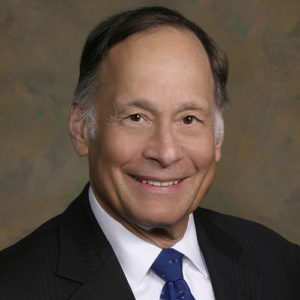 Recently, Jeff Cook was re-elected Secretary of the Massachusetts Business Roundtable. MBR is a public policy organization comprised of Chief Executive Officers and Senior Executives from some of the state’s largest employers. MBR’s mission is to strengthen the state’s economic vitality. MBR’s policy work includes task forces on education initiatives, health care, taxation/regulation, workforce development, and infrastructure issues.
Jeff has been a member of MBR for twenty-five years, and is currently an active member of its Energy Task Force. Jeff has also worked on the Transportation Task Force, where he contributed to the Pittsfield Airport project. MBR’s Deputy Director Chris Kealey describes Jeff as offering an invaluable and important perspective on business in western Massachusetts, and how statewide decisions affect trade and commerce in the Berkshires. For more about MBR, please visit its website.
Massachusetts has tried on numerous occasions to pass non-compete reform. As recently as July of this year, the Massachusetts Senate Committee on Rules proposed S.2418, a bill that dramatically revised H.4434, the bill passed by the House weeks earlier. The Senate bill contains numerous provisions that would drastically impact employer’s rights to enter into non-compete agreements with their employees, including:
- Non-competes would be limited to 3 months in length, unless the employee in question has breached a fiduciary or misappropriate employer property, in which case they are capped at 2 years.
- Non-competes would be prohibited for (1) non-exempt employees, (2) employees who are terminated without cause or laid off, (3) undergraduate or graduate interns, (4) employees 18 years of age or younger, and (5) employees whose average weekly earnings are less than two times the average weekly wage in the Commonwealth.
- Non-compete agreements must state that the employee has the right to consult with an attorney prior to signing and must be provided to an employee by (1) issuance of a formal offer of employment or (2) 10 business days before start date, whichever is sooner.
- Non-competes entered into during the course of employment must be supported by consideration beyond continued employment.
- Non-competes must provide for garden-leave pay in an amount equivalent to at least 100% of the employee’s highest annualized earnings during the previous two years.
This law, if passed, will dramatically change non-compete law in the Commonwealth.
- Employers would be required to inform the employees in writing within 10 days of termination of the employer’s intent to enforce the non-compete.
- Employers would be required to review the non-compete with the employee at least once every five years.
On May 12, 2016, President Obama signed into law the Defend Trade Secrets Act (DTSA), creating a federal cause of action for trade secret theft and misappropriation. Previously, companies harmed by stolen trade secrets had to resort to state law remedies. To succeed on DTSA claims, a plaintiff must first prove that the information in question rises to level of a “trade secret,” something defined broadly to include financial, business, scientific, technical, economic, or engineering information. Next, a plaintiff must establish that an individual “misappropriated” that “trade secret,” something defined as disclosure or use of a trade secret that was acquired via “improper means.” According to the statute, “improper means” includes theft, bribery, misrepresentation, or breach of a duty to maintain secrecy.
DTSA provides for a comprehensive remedial scheme that includes (1) an ex parte request for seizure of property necessary to prevent the dissemination of misappropriated trade secretes (2) injunctions to prevent actual or threatened use, (3) damages for actual losses, and (4) double damages and attorneys’ fees for willful and malicious misappropriation.
Misappropriation of trade secrets continues to be a significant issue facing companies. The likelihood that a company will confront this issue has increased dramatically as technology makes it easier to copy and distribute sensitive information. Given this reality, DTSA is likely to become an important step toward providing companies with an effective way to protect their trade secrets.